Seminal Statesman: On Atal Bihari Vajpayee’s Political Philosophy

Remembering Former Prime Minister Atal Bihari Vajpayee on his birth Anniversary, celebrated as ‘National Governance Day’
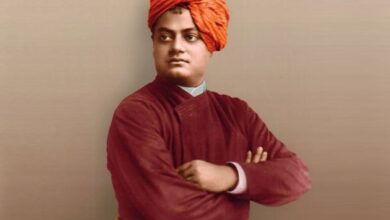
Atal Bihari Vajpayee occupied a rare space in Indian politics. He belonged to a party rooted in ideological rigidity, yet he spoke a language that often resisted it. On his birth anniversary, he is remembered easily and selectively as a poet-statesman, a moderate, a bridge. That memory deserves examination, not repetition.
Vajpayee entered politics through the Jana Sangh, carrying with him the intellectual influence of Deendayal Upadhyaya’s Integral Humanism. The school of thought rejected both Western capitalism and Marxism, favouring a culturally rooted nationalism. Vajpayee never disowned this foundation. But he softened it. He presented ideology with restraint, often choosing persuasion over provocation. That choice shaped his political personality.
His early parliamentary years established him as an orator of uncommon civility. Even as an opposition leader, he treated the House as a place of debate, not performance. While criticising, he used a language that acknowledged disagreement without delegitimising the other side. That habit now feels less like style and more like a lost political ethic.
Vajpayee’s prime ministership remains defined by a few decisive moments. The Pokhran-II nuclear tests announced India’s strategic confidence, but they also carried the cost of sanctions and isolation. Vajpayee accepted both outcomes. He framed the decision as necessity rather than triumph. Later, his Lahore bus journey signalled a willingness to talk to Pakistan without erasing history. Kargil followed soon after, exposing the limits of symbolism. Yet Vajpayee resisted escalation beyond military necessity.
The Gujarat riots of 2002 marked the sharpest moral test of his leadership. Vajpayee spoke of raj dharma and publicly acknowledged failure. But this acknowledgement did not translate into accountability. This revealed the limits of moderation when power demanded confrontation within one’s own political house.
Economically, Vajpayee accelerated liberalisation without dramatic rhetoric. Infrastructure projects like the Golden Quadrilateral reflected his belief in long-term state capacity rather than headline politics. Governance, for him, functioned as continuity, not rupture. The visibility of Vajpayee’s ideas in contemporary politics remains selective. His nationalism survives but his restraint does not. His emphasis on dialogue, institutional respect and calibrated language has thinned. Today’s politics prefers certainty over hesitation and volume over pause. Vajpayee treated silence as part of leadership. That habit now reads as weakness in a culture trained to reward assertion.
Vajpayee was not an ideological outlier but an ideological interpreter. He translated a rigid worldview into a language that democratic politics could temporarily absorb. The Bharat Ratna laureate reminds us that power once carried hesitation and that hesitation was considered a strength.
References: