Why IndiGo Flights Are Being Cancelled And What This Crisis Reveals About Indian Aviation ?
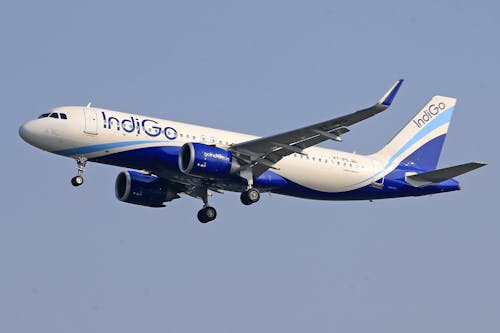
-Gourja Soni
Over the past week, India’s busiest airports have turned into scenes of complete chaos, with stranded passengers, overflowing waiting areas, and hundreds of IndiGo flights cancelled. For an airline known for its punctuality and efficiency, this collapse has left travellers angry and confused. And it naturally raises the question: Why are IndiGo flights being cancelled in such large numbers?
The truth is, this is not a simple operational glitch. It is a systemic failure created by new government regulations, tight airline planning, and an overstretched aviation ecosystem.
Source : Pexels
1. New DGCA Rules Triggered a Chain Reaction
India’s aviation regulator, DGCA, recently introduced stricter duty-time norms requiring pilots to receive longer rest hours to prevent fatigue, a safety-first policy that is absolutely necessary.
However, IndiGo, India’s largest airline, did not have enough standby pilots to absorb the impact of these changes.
What followed was predictable: rosters collapsed, crew availability fell sharply, and cancellations spiked across the country.
Reuters reported that IndiGo cancelled nearly 400 flights in a single day, marking one of the most significant aviation disruptions in recent years.
2. Passengers Are Paying the Price Again
What worries me is not just the scale of cancellations but the passenger experience during this crisis.
People reported:
- Last-minute SMS cancellation notices
- Hours of waiting at airports with no clarity
- Expensive last-minute tickets on other airlines
- Missed weddings, exams, interviews, and medical appointments
Photos from Mumbai Airport showed crowded gates and frustrated travellers seeking assistance.
It is unfair that passengers bear the brunt every time the system stumbles. When 200 – 400 flights are cancelled in a day, it’s not a “minor operational issue.” It’s a failure of planning and communication.
3. IndiGo’s Efficiency Model Has Hit Its Limit
IndiGo is known for a lean operating model, fast turnarounds, tight schedules, and minimum staff surplus. This keeps costs low but leaves no buffer for unexpected situations.
When the new DGCA rules demanded more rest time, IndiGo simply didn’t have extra pilots to step in.
The Economic Times highlighted that the airline has been running on a “tight roster with less downtime,” making it highly vulnerable to regulatory changes.
Airlines cannot operate like rubber bands stretched to the limit. Eventually, they snap, and passengers suffer.
4. The Bigger Problem: Indian Aviation Is Stretched Thin
This isn’t only IndiGo’s problem. The crisis highlights the more profound weaknesses of India’s aviation sector:
- Overloaded airports operating beyond capacity
- Weather disruptions that cascade into mass delays
- Shortage of pilots and cabin crew industry-wide
- Aggressive flight schedules with tiny buffer
A single change, like a new safety rule, can bring the entire system to its knees.
AP News reported that the situation had become so dire that the government temporarily lifted pilot restrictions to ease the crisis.
(Source: https://apnews.com/article/39aa7d2ebc5bae7a0e5b4352f130b5e3)
That alone shows how fragile the system is.
5. What Needs to Change Immediately
If India wants to build a world-class aviation ecosystem, this crisis must be treated as a wake-up call. Here’s what I firmly believe needs to happen:
✔ Airlines Must Plan Better
Build a buffer crew and better roster management systems. Profit cannot come at the cost of reliability.
✔ Transparent Communication
Passengers deserve timely updates, not last-minute cancellations and vague statements.
✔ Stronger Passenger Rights
Mandatory compensation, auto-refunds, and alternative travel options should be standard.
✔ Better Coordination Between DGCA & Airlines
Policy changes should be phased and supported with transition timelines.
✔ Faster Airport Expansion
Congested airports amplify every operational problem. Infrastructure must grow at the same pace as demand.
Conclusion: Aviation Cannot Grow Without Accountability
IndiGo’s flight cancellations are not just a corporate issue; they reflect the growing pains of India’s aviation ecosystem. The new DGCA rules were designed for safety, but poor planning turned a necessary reform into a nationwide crisis.
As air travel becomes the backbone of India’s mobility, airlines must prioritize planning, transparency, and passenger rights. Growth means nothing if reliability crumbles.
For a sector carrying millions of Indians every month, the message is clear:
Efficiency is important, but accountability is essential.