Demolition Row: On reconstruction Work At Varanasi Ghat
The Manikarnika Ghat redevelopment in Varanasi has sparked protests and political criticism.
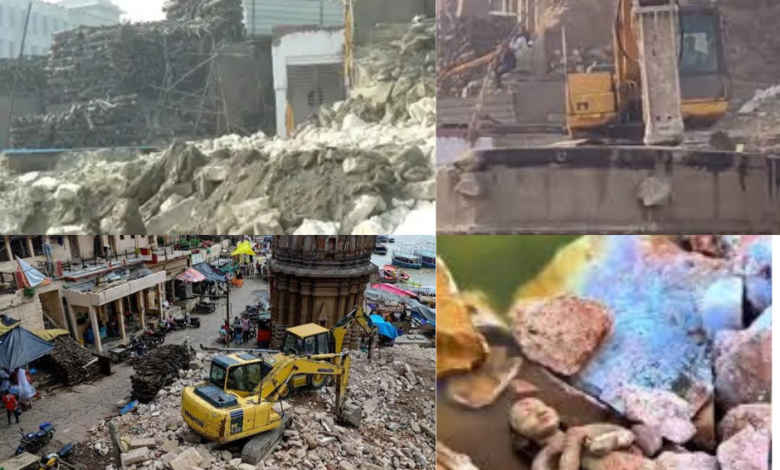
The recent reconstruction work at Manikarnika Ghat in Varanasi has stirred something deeper than debate about bricks and mud. On one side is the government saying plainly that no idols were damaged during redevelopment, that the sacred site remains untouched in its spiritual core and that the work aims at better infrastructure for devotees. On the other is the opposition and many residents expressing unease — not just about structures being altered, but about heritage, ritual, continuity and respect for what generations have known as the edge of life and death.
Manikarnika is not an ordinary public space. It is one of the oldest and most revered cremation grounds in the country, where the Ganges is both witness and participant in rites as old as memory itself. For many, it is not a tourist spot. It is where parents, grandparents and grandparents’ parents were taken in their last moments. It is a quiet confession of impermanence.
ALSO READ: Mumbai Matter: What Do BMC Election Results Say?
When bulldozers arrived, images of dismantled walls and cleared walkways quickly spread. Some residents protested immediately, fearing that sacred niches and heritage spots were being erased in the name of “redevelopment.” The Congress has been vocal, saying that Varanasi’s heritage is being damaged, that the process lacked consultation and that sentiment was being ignored. There were protests, raised voices, a sense that something intangible was slipping while the tangible was being rearranged.
The Uttar Pradesh government responded by saying no idols were harmed and that work was aimed at safer pathways, better access for pilgrims and structural strengthening. That explanation matters. But what matters more in places like Manikarnika is not only what is physically altered, but how people feel about it. Heritage is not only about stones. It is about the stories, memories and rituals tied to them.
Change in a city like Varanasi cannot be just functional. It carries emotional weight. When people see walls pulled down or memorials shifted, what they read is not always about design or utility. They see history, ritual and belonging being moved ahead of their own sense of place.
Infrastructure can be rebuilt. Ritual rhythm, once disrupted, takes longer to settle. And when sacred ground is at stake, government assurances like “nothing was damaged” are not wrong — but they are not enough. People need to feel that their heritage was considered, consulted and respected.
Redevelopment at sacred sites must be sensitive not just to architecture, but to emotion. Otherwise, what is gained in concrete is lost in connection.
References: