Photo To Philosophy: On “Nihilist Penguin” Trend On Internet
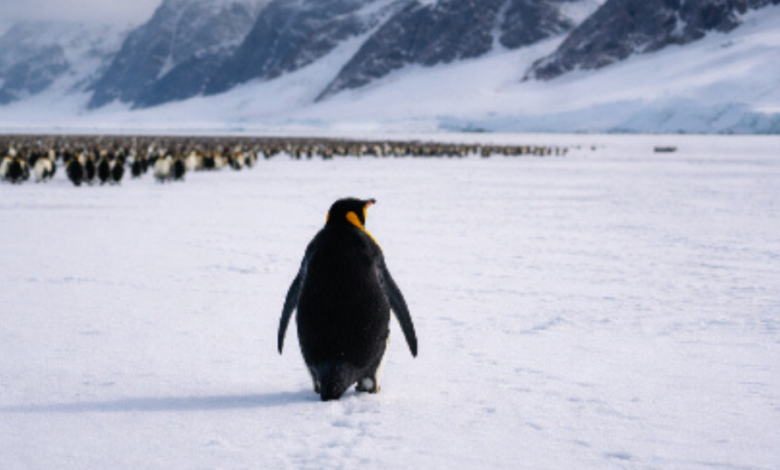
Sometimes an image becomes more than an image — it becomes a feeling. That is exactly what has happened with the “Nihilist Penguin”, a clip of a lone penguin slowly walking away from its colony toward distant mountains, which has taken over feeds across social media this month. The short, quiet video has been shared millions of times, not because of its biology, but because it feels familiar to a lot of people.
The clip itself is old — from Werner Herzog’s 2007 documentary Encounters at the End of the World. In it, an Adélie penguin, for reasons scientists say are most likely disorientation or confusion, wanders away from the sea and its colony into an environment where survival is unlikely. What biologists see as rare animal behaviour, internet culture has turned into something else: a metaphor.
On Instagram, the penguin’s slow march has been paired with music, captions and mood-laden tags. People describe it as a symbol of burnout, emotional detachment, existential drift — captions like “when you’re done with everything” or “me walking away from my problems” make the penguin less an animal and more a silhouette of a feeling.
That in itself is not strange. Humans have always projected meaning onto nature. What is different this time is the scale and speed. A moment that may have been noticed by a few dozen people in 2007 is now watched, remixed and reinterpreted by millions in 2026 within days. The internet turns ambiguity into analogy, and animals become stand-ins for human moods.
ALSO READ: Health Is Wealth?: On US Preparing To Exit WHO
What makes the “Nihilist Penguin” stand out is not that it teaches us about penguins, but that it reveals how we are thinking about ourselves right now. In an age of burnout, constant comparison and digital overload, millions see something of their own quiet exhaustion in the penguin’s daunting walk. That the bird is likely disoriented, confused or ill — as scientists suggest — makes little difference to the emotional reading. The internet is less interested in animal behaviour than in how we relate to that behaviour.
This trend also shows how memes, once dismissed as frivolous, have become a language of feeling. They condense complexity into images and invite interpretation rather than explanation. The “Nihilist Penguin” is not a philosopher, nor is it making a statement. It is simply moving in the only way it does, and we — restless, overwhelmed, hopeful for escape — see parts of ourselves in that solitary march.
Sometimes a penguin walking into the mountains is just a penguin. Sometimes, it’s a mood we all recognise. And sometimes, both can be true at the same time.