Awaited Agreement: On India & EU Free Trade Agreement
India and the European Union have finally reached a trade agreement shaped as much by global uncertainty as by economic ambition.
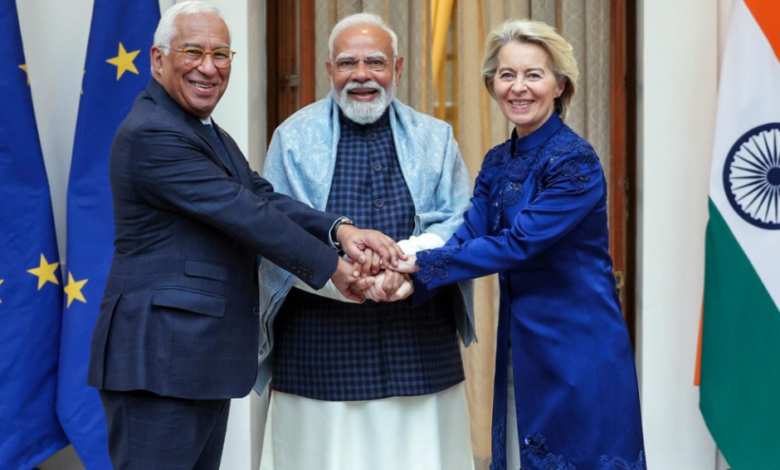
After years of drifting in and out of relevance, the India–European Union trade talks have finally landed somewhere concrete. Not with fireworks, not with triumphalism, but with a handshake that quietly acknowledges how much time has already been lost.
For nearly two decades, this agreement existed more as an idea than a reality. Governments changed, priorities shifted, and global trade itself grew more suspicious of grand promises. That this deal has arrived now says as much about the moment as it does about the negotiation. Supply chains are uncertain, old alliances are strained, and everyone is looking for partners who feel predictable, if not always easy.
On paper, the numbers are impressive. India and the EU together represent a massive share of global trade. Tariffs are set to come down, access is expected to open up, and sectors like textiles, automobiles, machinery and services are all being spoken about with renewed optimism. But trade deals rarely live on paper alone. They live in factories, in ports, in small exporters wondering whether “access” will actually translate into orders.
ALSO READ: Representation Reform: On UGC’s Latest Equity Rules
There is also a quieter subtext here. For Europe, India is a counterweight in a world where economic dependence on a few countries has started to feel risky. For India, Europe offers markets that are wealthy but demanding, regulated but stable. Neither side is pretending this is effortless. Labour standards, environmental rules, and domestic industry concerns remain points of friction, even if they have been politely folded into diplomatic language.
What stands out is the absence of hype. This is not being sold as a cure-all or a turning point for history. Instead, it feels like a belated acknowledgement that disengagement costs more than compromise. Whether this agreement changes lives in meaningful ways will depend on how carefully it is implemented, and how honestly both sides deal with its uneven effects.