Younger individuals miss the solidity of older love: Imtiaz Ali
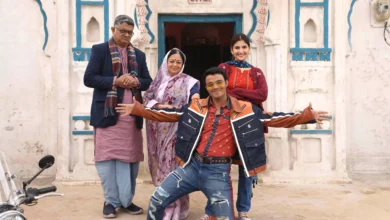
At a time when aggressive promotion has turn out to be the order of the day, director Imtiaz Ali’s ‘Foremost Vaapas Aaunga’ has chosen to put its religion within the viewers. After a gradual begin following its June 12 launch, the movie, which is about hope in an age of despair, has been steadily enhancing its box-office numbers.
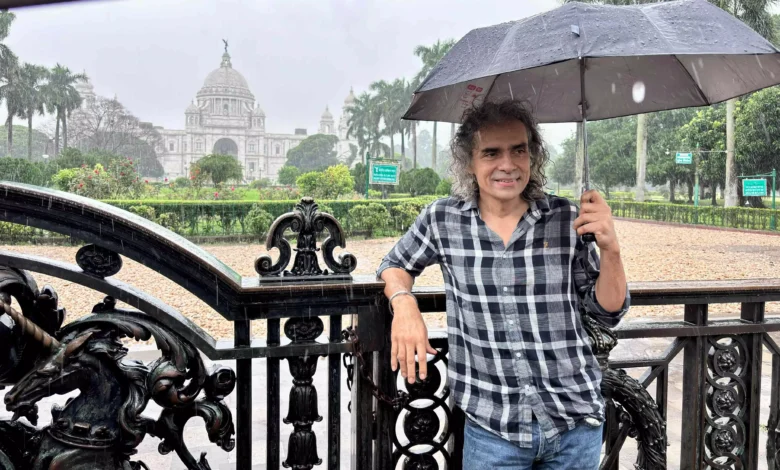
The ‘Jab We Met’ director, identified for making a few of Hindi cinema’s most interesting love tales, is now travelling throughout the nation to attach with audiences. On Thursday, he made a cease in Kolkata, a metropolis he calls his ‘favorite’ within the nation. He has associates and kinfolk right here, is aware of one of the best locations to eat (and infrequently visits town only for that) and cherishes the reminiscences preserved in its previous buildings.
Imtiaz’s movies are sometimes emotional journeys with narratives that discover heartache and the seek for that means. ‘Foremost Vaapas Aaunga’ brings collectively all these components towards the backdrop of Partition, considered one of historical past’s best tragedies. On a rain-soaked morning over espresso in Kolkata, Imtiaz speaks to ‘Millennium Put up’ about why he felt an urgency to inform a narrative about Partition, his concept of affection in trendy occasions and extra.
Many filmmakers at this time are making darker, grittier movies. You had been coping with considered one of historical past’s best tragedies, Partition, in ‘Foremost Vaapas Aaunga’. Most Partition movies deal with violence and hatred. You intentionally selected tenderness, longing and hope as a substitute. Was it necessary so that you can reclaim Partition by human reminiscences somewhat than political narratives?
Sure. I really feel that every one the tales that come to my thoughts are private… All of the tales that I’ve heard about Partition are private. I’ve met numerous individuals who witnessed Partition and have informed me the tales they noticed with their very own eyes. All these tales are private. After assembly them, I received this concept that there’s a facet of the story of Partition that’s lacking. It’s the human facet of affection and I assumed that this was priceless and ought to be informed. I additionally needed to inform the story rapidly earlier than this final technology passes away.
So, you felt a way of urgency to inform this story earlier than these reminiscences had been misplaced without end?
Sure. This technology that witnessed Partition is disappearing. We should acknowledge what they noticed, heard and the ache they endured. After which, we will study from the lesson of affection they’ve tried to show us.
So, was it throughout the taking pictures of ‘Amar Singh Chamkila’ that you simply heard these tales of Partition in Punjab?
Nicely, dwelling in India, one can hardly keep away from listening to tales of Partition. I’m from Jamshedpur. I’ve additionally heard tales about Partition. Once I was in Delhi, I visited Punjab for a lot of of my movies and virtually everybody I met had some historical past or story to inform about Partition.
Punjab has virtually turn out to be a recurring character in your cinema, from ‘Rockstar’ to ‘Love Aaj Kal’, ‘Amar Singh Chamkila’ and now ‘Foremost Vaapas Aaunga’. What retains drawing you again to its individuals and emotional panorama?
I’m not so certain about this, however I really feel a sure sense of belonging there. I really feel a sure pleasure when I’m there. I really feel I can see tales in Punjab and relate to them. I really feel like amplifying these tales and after I return to shoot in Punjab, I uncover extra issues. Then I need to make extra movies there. So, it’s like a cycle.
Migration is maybe the defining story of the twenty first century, from refugees to local weather displacement to financial migration. Was ‘Foremost Vaapas Aaunga’ your manner of connecting the trauma of 1947 with what the world is witnessing at this time?
(Cuts in) Completely, 100 per cent. I used to be focusing extra on man-made trauma and Partition in ‘Foremost Vaapas Aaunga’. I needed to liken it to all of the tragic incidents which are taking place the world over at this time. It’s like in the event you neglect historical past, you’re condemned to repeat it.
That is additionally a narrative of immortal love in a commitment-phobic world. Do you suppose youthful audiences, dwelling within the age of relationship apps and instantaneous connections, are nonetheless drawn to old style love tales? Has your concept of affection advanced over time?
The younger individuals are connecting extra to the movie as a result of they miss the solidity of the love of the older technology. It’s precisely what occurs within the movie between Diljit Dosanjh’s and Naseeruddin Shah’s characters as grandson and grandfather. Diljit misses the type of love that Naseer has in his life. He needs he had the type of love that Naseer carries in his coronary heart. That’s precisely what the youthful technology feels when they’re watching the movie.
That is your first collaboration with Naseeruddin Shah. Was it simple directing the legend?
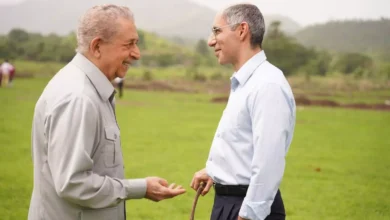
Sure, it was simple. Truly, he’s simply Naseeruddin Shah, however he behaves like a younger actor. He’s extraordinarily enthusiastic and fairly demanding. He’s totally concerned on the set and expects that very same involvement from all people. That’s apparent. I believe there was superb synergy between Naseer, the unit and me. He stays our favorite actor on this movie. The unit additionally loves him greater than they love the opposite actors.
Of Loneliness, Love & Extra
You’ve usually spoken about love, however your movies are equally about loneliness. Do you suppose loneliness is the defining emotional situation of latest life?
Nicely, in ‘Foremost Vaapas Aaunga’, what I’ve learnt about loneliness is which you could cope with it by having love in your coronary heart. There’s a poem that goes, ‘Tum mere paas hote ho goya/ Jab koi doosra nahi hota’. That is what it’s. What’s in your coronary heart turns into your fixed companion.
In your movies, be it ‘Tamasha’, ‘Jab We Met’ or ‘Love Aaj Kal’, your characters usually discover readability solely after they go away acquainted environment. Do you consider journey is crucial not only for private progress but additionally for you as a filmmaker?
Journey is unmistakably one of the necessary elements in my life and I consider it’s in many individuals’s lives too.
It’s been 15 years because you shot ‘Love Aaj Kal’ with Saif Ali Khan in Kolkata. Do you’ve gotten plans to come back again to Kolkata to shoot? The color palette of town has modified quite a bit.
(Cuts in) I’ll come again to Kolkata to shoot not for what has modified however for what has remained unchanged. It’s the reminiscences, the nostalgia and the fantastic thing about the buildings in Kolkata that entice me to this Metropolis of Pleasure. Kolkata is essentially the most inventive and most lovely metropolis within the nation. It’s undoubtedly my favorite metropolis within the nation. So, I hope I hold coming again repeatedly.