
The Ravine and the Temple
Hindi cinema movies Central India most readily when it turns violent. Raja Bundela has spent a profession refusing that picture.
When Hindi cinema goes searching for central India, it finds the ravine. From Shekhar Kapur’s ‘Bandit Queen’ and Tigmanshu Dhulia’s ‘Paan Singh Tomar’ to Abhishek Chaubey’s ‘Sonchiriya’, the Chambal ravines attain the display screen as mud and dacoits. Bundelkhand, beside them, is drawn into the identical image. One of the best of those movies, Dhulia’s and Chaubey’s, are grave and sympathetic works that blame the state fairly than the outlaw. Even so, the area appears most filmable when it turns violent and the ‘baaghi’ is its passport into the body.
I’ve been fascinated by one filmmaker from that land who did the other. Raja Bundela, an actor and director from Lalitpur in Bundelkhand, grew up on the outlaw mythology the flicks love. I sat with him just lately on ‘The Second Seat’ and one line stayed with me. He calls his personal life a present, not a climb, which is maybe why he by no means romanticised the lads who climbed out of those ravines with weapons. It issues past one man. A area the digital camera retains lowering to violence loses the precise to be imagined in any other case and its individuals are the final to form the image.
In 2002, he directed ‘Pratha’, casting a younger Irrfan Khan because the priest who anoints a village woman as a dwelling goddess, a decade earlier than ‘Paan Singh Tomar’ made the identical actor the face of the Chambal dacoit. Bundela’s digital camera went to not the ravine however to the temple. The woman is worshipped in public and utilized in personal, the crime hidden beneath the shrine that sanctifies it. The place the dacoit movie goals its suspicion on the state and the police, ‘Pratha’ turned it on the non secular energy of Bundela’s personal society. He was assaulted at a Bhopal screening for it, then accused of staging the assault and the movie was buried twice over. It stays one of many braver unseen movies of that decade.
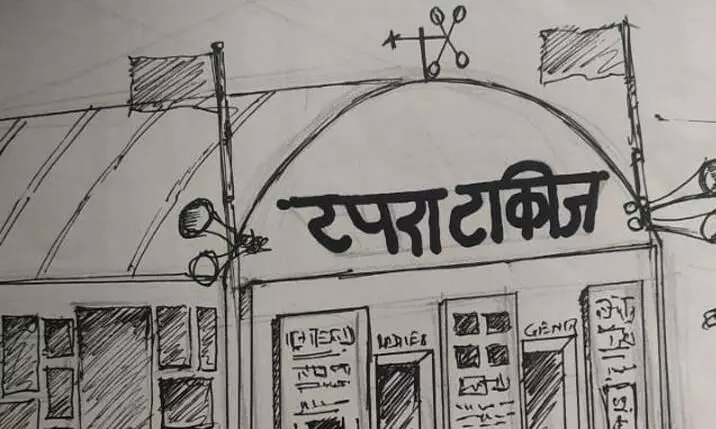
The refusal didn’t cease at ‘Pratha’. The movie competition he based at Khajuraho, the ‘Tapra Talkies’ he carries into villages and the ‘Ram Mahotsava’ at Orchha all insist on a Bundelkhand of temple, river and devotion fairly than ravine, revenge and rupture. He remembers village girls in a type of tarpaulin huts weeping by an English movie a few trafficked Nepali woman and he took it as proof that the hut was not a compromise however the entire level. He isn’t nostalgic concerning the outdated defiance, solely clear-eyed about its price. Burn a bus at the moment, he informed me and the bulldozer involves your own home. The combat is now a struggle of concepts, waged over what a area might even see of itself.
That’s the true topic of his work. The outlaw’s picture flatters the outsider’s digital camera as a result of a spot is best to movie when it’s on fireplace. Bundela’s cinema makes the slower declare that the individuals of a spot ought to get to writer its image. Masterpiece or not, it’s an argument his a part of the nation hardly ever will get to make in its personal voice.
Darshim Saxena is a screenwriter and movie analyst. She is the founder and host of ‘The Second Seat’, a long-form dialog platform devoted to cinema’s craft, reminiscence and authorship past box-office narratives. Her platform crossed 100K subscribers inside 56 days of launch, proving an viewers for depth



![Priyanka Chopra in Varanasi [Source: Social Media]](https://realitypost.in/wp-content/uploads/2025/12/20251223_082252-scaled.jpg)