Winkle Twinkle: Time places beliefs to check
In 2002, when Bratya Basu’s play ‘Winkle Twinkle’, directed by Debesh Chattopadhyay, created a lot hullabaloo on the Bengali stage, the CPI(M) was in energy in Bengal. The TMC was the opposition, and the BJP was nearly non-existent within the state. 24 years later, the political panorama has been turned on its head. The BJP is in energy in Bengal for the primary time; the Left Entrance is barely surviving with only one seat within the Meeting and the TMC, now within the Opposition, is itself divided into two factions. Time, certainly, is a robust warrior and a weapon. Srijit Mukherji’s ‘Winkle Twinkle’, his adaptation of Basu’s acclaimed 2002 play, exhibits that point adjustments every part.
Sabyasachi Sen (Ritwik Chakraborty), who disappeared from police custody in 1976, wakes up 26 years later. It’s 2002. Sabyasachi initially struggles to know the world round him, however what unsettles him most is the political ideology of his son, Indra (Parambrata Chatterjee), which is totally reverse to his personal.
Tennessee Williams, in ‘The Glass Menagerie’, wrote that “Time is the longest distance between two locations.” That line appears significantly apt right here. The space between Sabyasachi and Indra is ideological, emotional and generational. Indra finds it troublesome to name him ‘Baba’ and addresses him by his identify. Sabyasachi, in the meantime, is taken again to a different time, to the second when his personal father found that he was a communist and he, too, started addressing his father by his first identify. Time has come full circle.
Sabyasachi is, in fact, our modern-day Rip Van Winkle. He wakes as much as uncover that the political and social world he knew has been essentially altered. Now, Bengal has moved from the Left in direction of the Proper and the political realities that Basu captured in 2002 have modified themselves. But the ideological conflict inside households stays remarkably acquainted.
I caught a glimpse of that conflict simply 4 months in the past. Even in the present day, when family and friends collect, political and ideological variations can rapidly develop into the centre of dialog. We could disagree about nearly every part, however what ‘Winkle Twinkle’ makes clear is that disagreement itself just isn’t the issue. The actual query is whether or not we are able to debate, query and dissent.
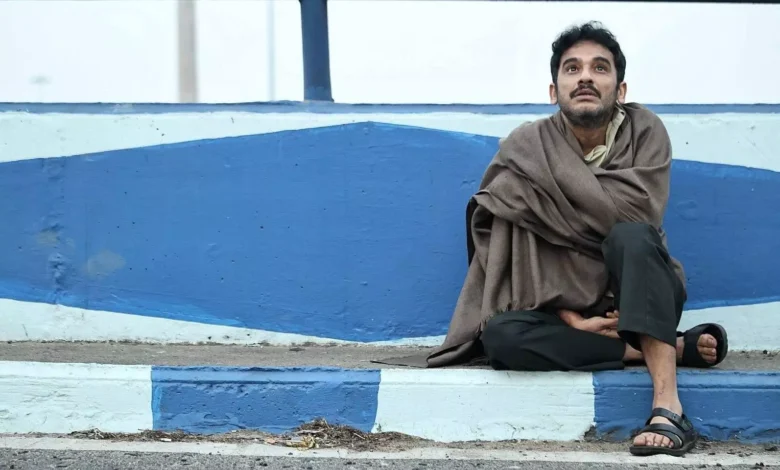
Within the penultimate sequence, Indra stands alone on a flyover, exhausted, combating a battle with himself. He sees one thing of himself in Sabyasachi and realises that he’s slowly shifting away from the beliefs he grew up with. On the similar time, he understands the tough realities of the current. Time has modified, and the world round him continuously tells him that the age of ethics and idealism is over. The battle isn’t merely between father and son or Left and Proper. It’s between what one believes and what one should develop into to outlive. Dissent is probably the true yardstick of a wholesome society. Right now, an individual’s political perception or ideology typically turns into the very first thing by which that particular person is outlined. However maybe political id shouldn’t be the yardstick. The power to dissent needs to be.
The movie can be full of a number of the most interesting performances seen in current Bengali cinema. Ritwik is extraordinary as Sabyasachi. Watch him get up on the flyover in 2025. Or the scene the place he encounters Anashua Majumdar as his older Rajlokkhi after which peeks from behind to have a look at the youthful Rajlokkhi, performed by Sohini Sarkar. There may be an nearly childlike surprise in these moments. ‘Na Thaka Priyo’ is a phenomenal track about love travelling throughout time and one that’s probably to stick with viewers.
I favored the way in which Srijit weaves the love story between Sabyasachi and Rajlokkhi. It’s refreshing as a result of it isn’t constructed across the vocabulary of up to date romance: likes, shares, messages and immediate connections. Right here, love is held collectively by shared beliefs. Their politics doesn’t merely coexist with their love; in some ways, it brings them collectively.
I used to be in class when ‘Winkle Twinkle’ was staged in 2002. I watched the play a lot in a while ‘YouTube’. Watching Srijit’s movie now, what stayed with me was this concept of consciousness, the uncomfortable consciousness of who we have gotten.