Uttam Kumar@100: An enigma known as the Mahanayak
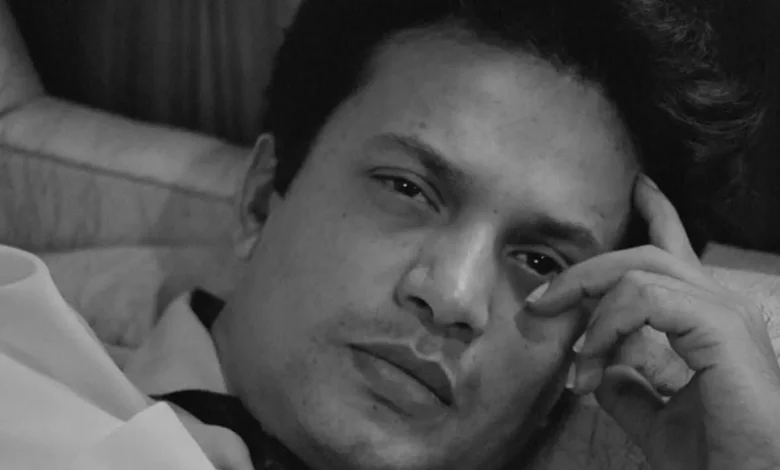
In a very fashionable scene from Satyajit Ray’s ‘Nayak’ (1966), Arindam Mukherjee, performed by Uttam Kumar, speaks to his roommate (Nirmal Ghosh) about his expertise of working with senior actor Mukunda Lahiri (Bireswar Sen). Arindam is agitated. All his scenes with Lahiri, he says, have been spoiled.
“An actor is aware of. After I was appearing, I may really feel that one thing wasn’t proper,” he says. His roommate reminds him that there are solely 4 scenes between him and Lahiri. However Arindam isn’t satisfied. He argues that Lahiri may perceive that he had ready for the scene and would carry out nicely in entrance of him and due to this fact couldn’t take it. He criticises Lahiri’s efficiency, insisting that ‘this isn’t movie appearing’ and that one can’t be ‘overdramatic’ in entrance of the digicam. His roommate laughs at Arindam’s tendency to be excessively self-critical and means that this very high quality will work in his favour and assist him shine. Arindam responds with sudden, emphatic confidence. “In fact, I’ll. I’ll go to the highest, the highest… the highest,” repeatedly pounding his fist as he says it.
What makes the scene iconic is that Ray is just not merely exhibiting a profitable star being conceited. He’s revealing the psychological contradiction inside Arindam, a struggling actor who’s judging his personal appearing, worrying about how he seems on display and evaluating himself with different actors. Anybody who has watched this scene in ‘Nayak’ can resonate with each phrase Uttam utters. And that’s as a result of, in Arindam, now we have all the time seen Uttam, the person behind the star – an actor who was intensely conscious of his craft, fiercely formidable and by no means solely glad with himself. And maybe, that’s exactly why he stays the Mahanayak.
Right here was a boy born Arun Kumar Chatterjee on September 3, 1926, at his maternal residence at 51 Ahiritola Avenue in north Kolkata. His father was a movie projectionist at Metro Cinema. Uttam, a reputation given to him by his maternal grandfather, was not significantly preferred by his mom, who most popular to name him Arun. He made his debut with ‘Drishtidan’ in 1948, however his journey was removed from simple. The movie and his subsequent six releases failed on the field workplace, incomes him the tag ‘Flop Grasp Normal’.
Sripurna Sanyasi, the non secular grasp of his maternal household, had predicted that your entire nation would recognise him by the title ‘Uttam’. Sanyasi noticed his smile. The smile that also drives Bengalis loopy, 100 years on.
That prediction started to come back true in 1952 with Nirmal Dey’s ‘Basu Paribar’, additionally starring Sabitri Chatterjee, Supriya Devi and Bhanu Banerjee. In 1953, he starred reverse Suchitra Sen in ‘Sharey Chuattar’. The movie turned a superhit and audiences immediately fell in love with the pairing. Uttam had arrived. Quickly, each director needed to solid the duo, who went on to turn out to be one of the vital profitable display {couples} in Bengali cinema ever.
For Bengalis, Uttam is just not merely a matinee idol. He is part of the Bengali psyche and cultural identification. He outlined the very concept of the Bengali hero and have become an actor for all ages. Whether or not enjoying romantic leads, morally complicated characters or villains, he possessed a uncommon skill to mesmerise audiences together with his allure whereas remaining firmly accountable for his craft. It’s mentioned that Ray wrote ‘Nayak’ particularly with Uttam in thoughts and that he would have deserted the challenge altogether if the star had turned it down.
Bengal by no means obtained one other actor fairly like Uttam. In ‘Jadubansha’, Ganada made us cry. In ‘Saptapadi’, his Krishnendu made us fall head over heels in love with him. In ‘Bagh Bondi Khela’, his Bhavesh Banerjee made us despise him. In ‘Thana Theke Aschhi’, his morally ambiguous, sharp-witted cop Tinkori Haldar engrossed us. Be it as Byomkesh, the soccer fanatic in ‘Dhonnyi Meye’, the emotionally wounded man trapped in a failing marriage in ‘Jatugriha’ or the lonely and weak businessman Ananga Dutta in ‘Nishipadma’, Bengal obtained an actor who merely couldn’t be bracketed. His romantic movies have been, after all, a staple of Bengali cinema and repeatedly turned blockbusters. However Uttam by no means allowed his romantic picture to turn out to be the restrict of his appearing. He saved pushing himself in direction of characters that exposed his outstanding vary.
Nationwide Award-winning ‘Mayurakshi’ director Atanu Ghosh believes Uttam was fast to know that his romantic picture couldn’t be the top of his vary as an actor. “In 1959, a younger Uttam acted in Prabhat Mukherjee’s ‘Bicharak’. By that point, he was already a bankable star with movies like ‘Agni Pariksha’, ‘Sagarika’ and ‘Harano Sur’ having been launched. In that sense, there is no such thing as a romanticism in ‘Bicharak’ and Uttam performed a choose. However he was keen to problem himself and went forward,” mentioned Ghosh.
The ‘Binisutoy’ director additionally believes Uttam had very completely different types of movie appearing that existed facet by facet all through his profession. “On one hand, he was doing romantic movies like ‘Harano Sur’, ‘Saptapadi’ after which there have been psychologically complicated works akin to ‘Ekhane Pinjar’ and ‘Nagar Darpane’. He equally excelled in comedy movies like ‘Dhonnyi Meye’, ‘Mouchak’ and ‘Ogo Bodhu Sundari’. Uttam was a really trendy actor and in a real sense, the revolution that occurred all around the world in movie appearing at the moment, he was actually a consultant of that within the Indian context,” mentioned Ghosh.
Acclaimed Bengali filmmaker Indrasis Acharya, identified for ‘Bilu Rakkhosh’, ‘Pupa’ and ‘The Parcel’, believes Uttam was far forward of his contemporaries. He says the actor consciously used his nuances, emphasising the very qualities that made him distinctive – his smile, the rotational angle of his neck and his skill to current the proper profile from the cinematographer’s perspective. Uttam, he believes, was aware of each inch of his physique.
“He was very a lot a technical actor with a excessive emotional quotient. He understood how one can use his physique components nicely in appearing. He used his palms, his posture, his stroll and naturally, his smile nicely to suit into each character he did. Additionally, he was a really observant actor. Subsequently, when he’s enjoying a health care provider in ‘Agnishwar’, you wish to imagine him,” he mentioned.
Uttam turned the face of latest, aspiring Bengali youth. However this was a really completely different sort of youth, one who cried, who was flawed and weak (each on display and off display). We reside in an age the place Gen Z and Gen Alpha are the buzzwords, the place consideration spans are measured in 30-second reels and the place poisonous masculinity is each challenged offline and celebrated on the massive display. For generations of Bengalis, Uttam nonetheless embodies the perfect Bengali man. Even right this moment, one finds ladies swooning over his dhoti-clad gentleman, the weak romantic hero who listened, cried and allowed himself to be wounded. That continues to be a rarity in cinema. He revered Suchitra Sen’s expertise and agreed to have her title seem alongside his on-film credit and publicity posters even earlier than his.
“Our psychological conditioning is that males can’t cry. However then got here Uttam Kumar, a romantic lead who cried, who was actual and humane. He offered another imaginative and prescient of masculinity. He was the romantic hero of on a regular basis middle-class Bengali life. And due to this fact, the continual love for him continues,” mentioned younger filmmaker Arjunn Dutta, whose current movie ‘Deep Fridge’ gained a Nationwide Award.
In the present day, stardom and success will be manufactured by way of algorithms, developments and social media metrics. Uttam wanted none of them. He delivered hits after his dying too (a lot of his movies have been launched after he handed away on July 24, 1980). His stardom is a legacy. In ‘Basanta Bilap’ (1973), starring Soumitra Chatterjee and Aparna Sen, there’s a dialogue wherein Chinmoy Roy asks actress Shibani Bose to reward him with the phrases, “Ek bar bolo Uttam Kumar.” We are saying, ‘Baar baar bolo Uttam Kumar’. Completely satisfied birthday, Mahanayak.
Past The Stars
· Born on September 3, 1926, at his maternal residence located at 51 Ahiritola Avenue in North Kolkata
· His father, Satkari Chattopadhyay, was a movie projectionist in Metro Cinema
· In 1936, he based a theatre group known as Lunar Membership, alongside together with his mates, whose first manufacturing was Rabindranath Tagore’s ‘Mukut’
· After commencement, he joined Calcutta Port Belief as a clerk within the money division, with a month-to-month wage of Rs 275
· He was a swimming champion on the Bhowanipur Swimming Affiliation three years in a row
· He was known as ‘Flop Grasp Normal’ after his successive flops on the early stage of his profession
· In 1953, he starred reverse Suchitra Sen in ‘Sharey Chuattar’ for the primary time
· As a talented footballer, Kumar used to play within the right-back place and was a lifelong Mohun Bagan supporter