Assi: Counting With out Trying
Movie: Assi
Language: Hindi
12 months: 2026
Director: Anubhav Sinha
Forged: Kani Kusruti (Parima), Taapsee Pannu (Advocate Raavi), Mohammed Zeeshan Ayyub (Vinay), Kumud Mishra (Kartik), Manoj Pahwa (Deepraj), Revathy (Vasudha), Satyajit Sharma (Opposition Counsel), Advik Jaiswal (Dhruv), Vipul Gupta (Ballu), Sahil Sethi (Sameer), Akanksha Choudhary (Kaveri)
Style: Courtroom Drama / Social Drama / Thriller
Runtime: 133 minutes
Launch: Theatrical (February 20, 2026)
“I used to be silly.” The primary one that taught Parima see the world wasn’t the state. It was her mom.
The lesson was easy: by no means step out and not using a man. This isn’t cruelty, it’s inheritance. She wasn’t taught be protected. She was taught blame herself when security failed. ‘Assi’ is a movie about who’s allowed to see clearly, who chooses to not and who’s punished for insisting on sight.
Within the automobile, brutality unfolds alongside one thing quieter, refusal. The motive force retains the automobile shifting whereas murmuring in protest. One other man watches his friends for approval as a substitute of wanting on the lady in entrance of him. Care is reserved for kin. A stranger doesn’t qualify.
The identical logic governs establishments. The police officer doesn’t recognise injustice in precept. Empathy in ‘Assi’ travels by familiarity – somebody’s daughter, somebody’s spouse, by no means merely a citizen. When requested to establish the boys, she says she will be able to’t recognise them clearly and apologises. The system calls for precision, whereas trauma has already reorganised notion. The remainder is institutional theatre, as CCTV footage misplaced to monkeys, as if the state should borrow wildlife to excuse its personal disappearance.
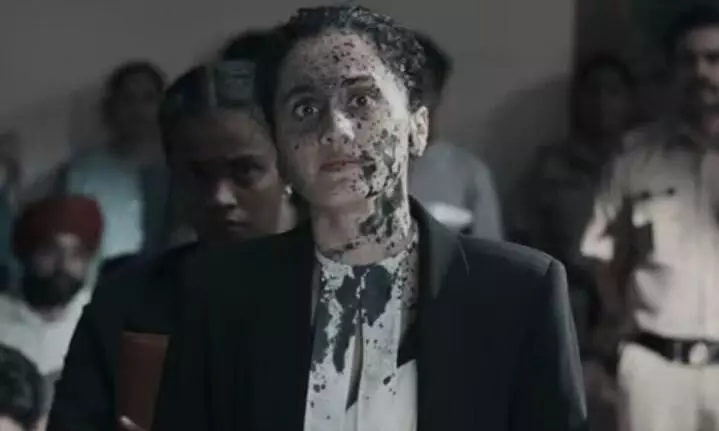
The accused are ordered to uncover their faces. Parima wraps herself in a white floral dupatta earlier than getting into. Nobody asks her to unveil. She should determine to reveal herself. When she lastly does, the prosecutor turns away. He prefers the security of the summary file over the survivor’s presence. The discarding of Parima’s indigo floral skirt initiates the floral motif of energy. Perpetrators preen in gold-floral mirrors, their moms silencing threats to protect home delusion – typically silencing a daughter dressed to depart. It’s solely Raavi who reclaims this id, carrying a floral shirt, an act of visible insurgency.
Visibility turns into one other labour assigned to the survivor. Exterior the courtroom, witnessing turns into a spectacle. Neighbours collect at her home, changing trauma into one thing that may be attended, mentioned and exited earlier than dinner. Later, her faculty principal’s notion echoes that the establishment doesn’t ask whether or not she will be able to return to life. It asks whether or not it may well bear to take a look at her with out discomfort.
Even the kid’s sight view is negotiated. “Let him stay a toddler,” a lady officer insists, as if innocence will be preserved by managing what he’s allowed to register. The movie withholds the second he’s advised the reality. The transmission of disgrace occurs off-screen.
After the assault, the cellphone rings beside the garments stripped from her. A toddler is looking to ask the place his mom is. Two worlds occupy the identical body. Home innocence reaching outward and the proof of what has simply been performed to her. The kid can’t see what the digital camera reveals. Neither can Vinay. The movie makes the viewers the one witness.
There may be one transient interruption to this choreography. Raavi and Parima sit over ‘chai’ outdoors the courtroom. Parima admits she not is aware of what successful means. Raavi doesn’t argue. She merely raises her glass. The movie permits this pause solely briefly. Even tenderness should not delay the equipment of adjudication.
Even the digital camera is complicit on this choreography. It begins in detachment, framing arguments from behind or alongside the prosecution, aligning the viewer with process somewhat than ache. Solely step by step does it shift nearer to Raavi. Seeing right here isn’t harmless. It’s staged, recalibrated and eventually weaponised.
The burden of vigilance rests on the lady. The burden of forgetting is outsourced to everybody else. The movie isn’t solely critiquing the state. It turns the gaze again on the viewer.
Parima is probably the most legible candidate for justice as a married, employed, supported and articulate lady. But she is lowered to ‘Sufferer X’, a bureaucratic placeholder. The movie consciously selects the survivor who will be spoken for. If even she struggles to stay seen, what occurs to those that don’t match the template? The remainder dissolve into statistical residue, unnamed in public and rehearsing self-blame in personal, whereas the nation continues to rely with out wanting.
Darshim Saxena writes on cinema and tradition